

A Soliloquy on Solitude
Or, an observation of hugging the tatters of loneliness—voluntarily, inadvertently, and reluctantly

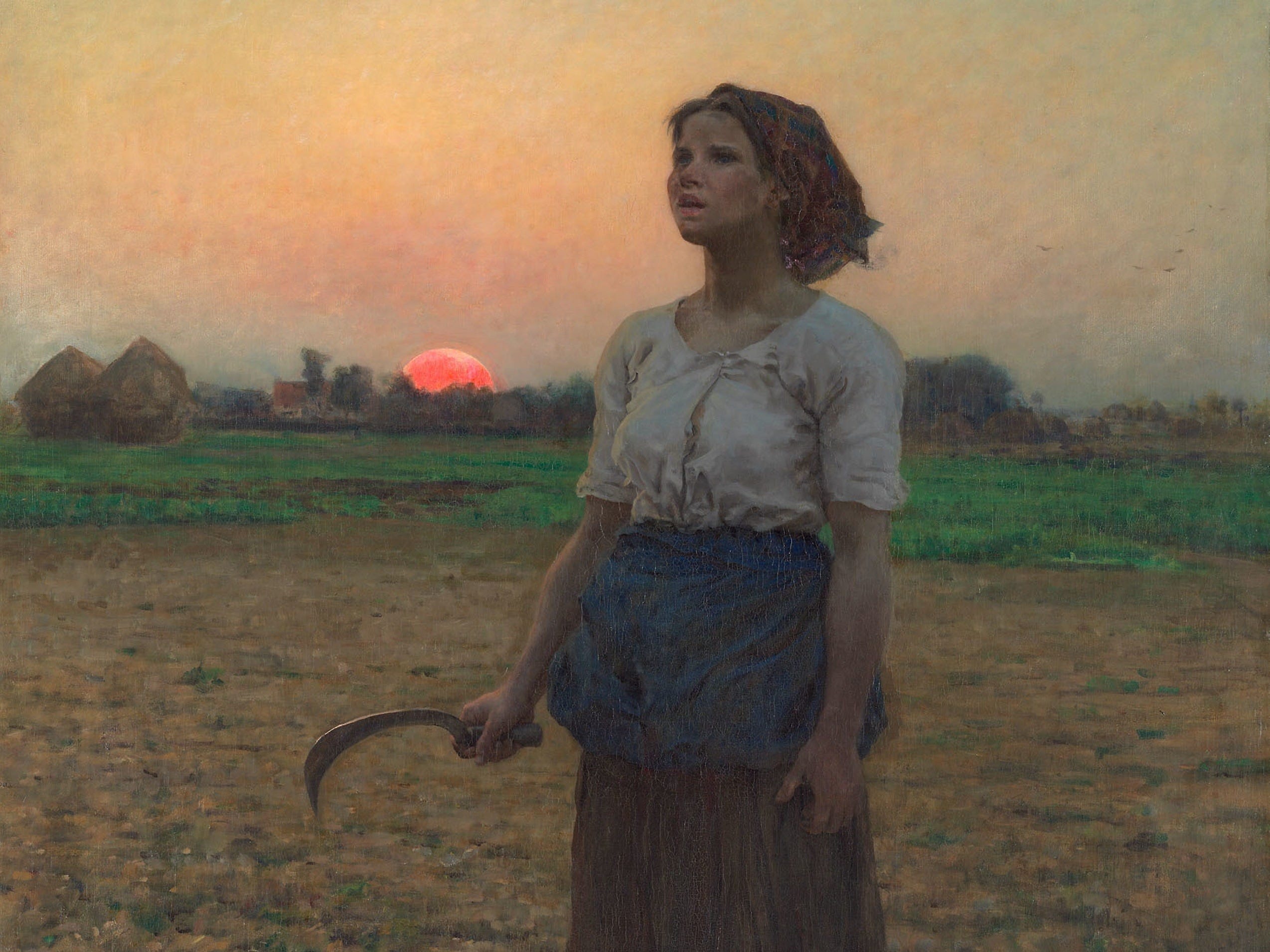

What really is solitude?
It’s a question that’s easier to find an answer to once you sift through a dictionary. But a tome won’t really express how you feel. Or, at least in my case, how I feel.
Loneliness, solitude, isolation, abandonment, seclusion, and all other solemn brethren of being alone are better prefaced against the textured backdrop of living that life. That is, experience brings you face to face with the “grain” pattern of what you sense in your time of solitude, whether volitional or institutional.
Growing up, I wasn’t really aware—in the sense that most kids are—of what it means to be lonely. My friends would meet me when they were free. My parents had to leave me behind to tend to their official capacities. But I would, in due course, meet both parties along the way.
Yet, as I grew up, loneliness became more apparent. A veil of unprescribed colour that folded on itself when I tried to comprehend it.
My first brush with an understanding of solitude, now that I push my brows to concentrate on it, was—interestingly—William Wordsworth’s lyrical enjoyment, The Solitary Reaper.
My first read of the poem, in the confines of a cold classroom, on a wooden desk warmed by my day’s use, was one of recognition. Here was a poem that was different. It talked to me. Addressed me in a cadence I had not felt with any other literary or lyrical work, either in English or in my mother tongue, Hindi. All due credit goes to Wordsworth, of course, for living up to his family name.
Yon solitary highland lass! as he calls her, reaping the grain and singing to her tune of life. I, a mere Indian boy—of what, fifteen?—had absolutely no idea what the words were, in a contextual sense. Highlands? Lass? Hebrides? What were we even reading?
There was a picture assisting the poem in our English coursebook for 9th grade, a line art of a girl reaping what appeared to be wheat. That was enough, paired with the poem’s beat, to stroke my imagination into a scene.
Wordsworth cleverly makes himself a vessel of observation. I, the reader, was him. And he, or I, walked through the Scottish Highlands and was enchanted to the tune of a girl reaping grain.
Not much in the poem. But it doesn’t need more. It lives with you, particularly the idea of solitude, or at least the brand that the reaper was comfortable in. I, however, was not alone in that moment.
So once the bell rang, the periods went through, and the school day ended on a high noon note, I was to find myself back home, heaving from climbing three stories’ worth of stairs, all alone.
Then, I was in a solitude. Even though three floors hardly compare to the mountain-like elevation of the highlands, a feat better reproduced had I scaled the nearest hills of the Aravalli, this solitude was my own. So I sat down and re-read the poem. I felt the texture of the smooth page, imagining it bearing the winds of a place I had never seen, the rock of the earth I had never pressed, the scent of the fields I had never breathed. I knew this feeling. I had travelled spatially to a land far, far away.
My isolations—then without a label but frequented in the acts of reading books, playing video games, and enjoying cartoons and anime—had a new label. Solitude felt personal, a category of loneliness I had come to enjoy. Its thick, curry-like walls were safeguards of wild imaginations, fantasies, daydreams (including maladaptive ones) that burned my retina with the feeling of belonging.
But all this was in my headspace. Imaginarium, if you would, as that of that one Doctor Parnassus.
While it allowed me to be lost on my own terms day in and night out, I continued to grow up temporally. Not out of my solitude, but into a new understanding of what it was to me.
Youth, fresh out of teenage bumps, has its blessings and curses. While everyone was busy adhesively clinging to concentric circles of social hierarchies, I found the taste too much to deal with. But it allowed me to look back on my childhood. And it felt lacking.
I thought I had imposed solitude on myself. An “exit stage left” to dissolve behind the curtain and drown the noise outside. A realisation, however, was bubbling. My oddities of spilling daydreams and fixated infatuations did not fit in the circles of society. At least not the ones immediately at my disposal.
And then the memories of childhood resurfaced. Taunts on my nerdiness, an egg thrown, jokes made at barrel-shaped body, clowned for enjoying Pokémon, and the sidelines of the school playground I often marched. I had friends. I had solitude. Flip the coin. I was alone. I had solitude.
There is a trope in visual media that is overdone. Locking away a character in solitary confinement. Darkness. Thick walls. No contact.
Odd. But it felt wrongfully familiar. As if someone had forced that joyful lass to reap the fields in the highlands. She was whistling, singing, her melancholy strain only to bide the time.
What would Wordsworth say to this? Would he pen a new lyric for the lonely reaper? Probably. Probably not. He was an observer who relished, commented, and passed. The reaper remained confined between the tall stalks. All she had was her voice . . . and the sickle.
In such a world, I felt the air heavier than the winter blanket I wrapped myself in. The earth, less an expanse of stacked, movable soil and more a trapping of igneous rock. The fields, mundane like the tasks at hand.
Perhaps that was it. A night lamp in daylight, a pair of shades at night. No tug of war between the two, because I belonged equally to both.
Time doesn’t do well to those who dwell on the past. But space? And aren’t the two connected? It’s a stupid philosophical rhetoric. Potent, but a waste to dwell upon.
The now, however, does not leave. At least in the nanoseconds of brain processes. And so, unlike the two-faced god Janus, I am always surprised to find a third door to peek at. Just a peek. Entering this new form of solitude is . . . not something I look forward to.
Having become accustomed to three immovable presences in my life, presences whose permanence completes me, it’s hard to admit that an escape or old into the Highlands, if for nothing then just to reap edible grass, is a guilt-heavy trip I do sometimes make.
Don’t get me wrong. I do belong now: to my wife, to our daughter, and to our Shih-tzu. But time and space, nigh intertwined, are always apart when you need to plot them together, for the sake of your own plot.
It just so happens that, when time overruns the belonging, or the space feels cramped, I imagine an escape into solitude.
But who am I here? Or where am I, exactly? I belong elsewhere, not to the highlands, not with the sickle, and definitely not in the fields. No reluctant reaper of the highlands, lads!

It’s ironic how, in the underbelly of darkness, right before the clock calls it a day, I find myself alone in front of my screen to express an idea that tilted and titled itself in the back of my head.
Originally, I was going to call it a “dissertation on loneliness.” But the moment I began to type, my (sometimes) analytical brain presented me with two factual inaccuracies:
a) I did not have a research body to back my ideas, and therefore
b) I was only fashioning my ramblings as an essay.
But who do I have to talk to? At least in the immediacy of things. I find my thoughts clearer once they’ve materialised out of my mind. Perhaps this is the solitude that the reaper felt, too?
If that is the case, then is this something done willingly? I find it hard to ask that question.
The thing is, would you? Are you a solitary reaper, a lonely one, or a reluctant one?

I relate so hard considering I've always been alone and friendless locally since I was a kid 🥹🥹🥹🥹🥹🫂🫂🫂🫂🫂🫂