

Are You Entitled to the Food You Eat?
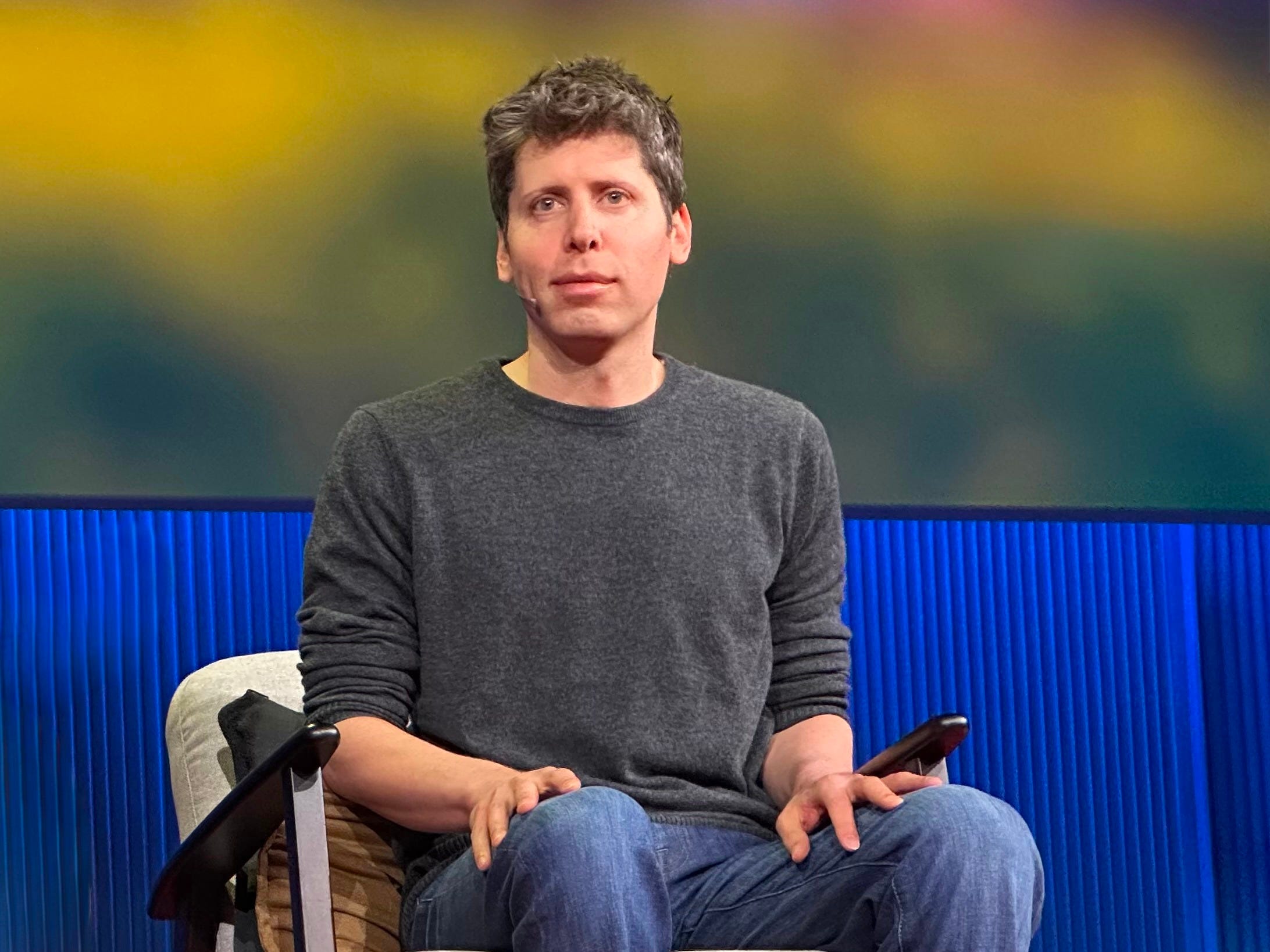
OpenAI’s CEO and AI evangelist, Sam Altman, has opinions on this matter.


What is food?
Sustenance, right? A demand of survival that pits you against nature’s entropy. Food is common to every living being. Living. Not artificially alive in a simulacrum of supposed human experience.
Food is, therefore, the baseline of existence. Different organisms, extant or extinct, utilise their energy gains from food to aid in their existence in the circle of life (I know, cheeky).
Human brains, for example, are a voracious energy sink, taking away nearly 20% of energy each day. That makes it the hungriest organ in our bodies. But it makes sense when you think about it; our brain is the biggest aid in our survival.
However, if you’re a tech evangelist sitting on the sun-kissed thrones of Silicon Valley, a surface-level glance at this information is enough to charge you with a sermon defending resource abuse by AI powerhouses.
Sam Altman tries to live true to his name. Tries, oh yes. It has Germanic origins, meaning “old man” with wisdom and experience behind the eyes. So when Altman pushes the boundaries of artificial intelligence, you feel it’s coming from someone passionate and serious.
Or so it seems.
In an Express Adda panel by The Indian Express during the AI Summit in India, he took arms against the completely valid criticism of AI models requiring intense energy investments by using his brain’s reserves to tell the beads of his wise rosary:
“But it also takes a lot of energy to train a human. It takes like 20 years of life and all of the food you eat during that time before you get smart. And not only that, it took the very widespread evolution of the 100 billion people that have ever lived and learned not to get eaten by predators and learned how to figure out science and whatever, to produce you.”
Always trust a tech billionaire to lecture on the inconsequence of your life.
Now, my spectacles are fogging from the steaming cup beside me, but I can clearly spot the manic smudges of entitlement that Altman carries. What does he mean by “produce you”? I know that we’re just sacks of meat, but you don’t have to be so blunt. My intelligence, and that of my fellow people across the globe, is just as equal to your intelligence.
To compare a tool to humans is like comparing apples to peelers. Especially a tool that has been branded on billboards as a replacement for human work and ingenuity in skinning a Granny Smith. Just because we like a good meal or seven (some of us are nasty little Hobbitses) doesn’t give anyone the right to hog these resources for their unblinking, unbreaking, and unfaltering robots.
Then again, it’s hard to keep a rational head when the subject of this debate spans the entirety of bipedal evolution, agricultural and industrial revolutions, a multitude of cultures, and religions that live or died.
That’s the neat part, though. None of us has to be perfect. I like my humans with conflict. That’s why I gravitate towards characters in media who are not paragons of perfection but broken and trying their best to make do. It’s that experience of the human brain having lived that sits perfectly crisp with my morning rusk and my evening tea.
Yes, these brains have left a dirty, bloody trail, but they are the powerhouse (right after mitochondria) of human lives. I could be sipping a decaf, having a McAloo Tikki, or even taking time off from my schedule to eat some crispy flatbread with pickle, but I’ll have the satisfaction of knowing that my food, fast or slow, did not come from evacuating villages, clearing forests, and firing people, all in the name of automation. (Unless I’m munching Nestle products.)
Altman, however, has more to say.
The fair comparison is, if you ask ChatGPT a question, how much energy does it take once its model is trained to answer that question, versus a human? And probably, AI has already caught up on an energy-efficiency basis, measured that way.
I mean, he has a point. If a human were to find me on the street (big if) and ask me to describe the reasons that led to the diminishing and downfall of Constantinople (the city), I’d blink at him for a full thirty seconds before vaguely recalling the titbits of crusades, Ottoman military conquests, and papal incompetence.
At this point, the human on the street will look at me in disbelief or try to fact-check on Wikipedia or other trustworthy historical sources. Or maybe they’ll try to argue me down on my critique against papacy by using their brain’s energy reserves. We could then hang out in a local gastropub to continue the debate and annoy the local patrons.
In comparison, ChatGPT will neither argue with you nor contradict you. You can get what you want or even gaslight it into submission. All this and more coaxing to satisfy you, to quickly deliver the validation you were looking for. Such a good use of the water you drink, the power you consume, the food your parents put on the table. That too without a ruckus.
In fact, I find this to be the one area we humans often lack in. We might have erected high-sailing flags of empathy, but deep down, we are all selfish. All to do with survival, you see. ChatGPT has no sense of self, though. Sure, the company behind it can go from a non-profit to for-profit, but that’s not on poor Chat. It’s just GPT-ing its way through corporate greed.
You and I (and the hypothetical human on the street in the example above) just don’t have the monetary resources to throw at our whims and be altruistically pleasing to each other. It’s the one resource we, compared to Altman, severely lack.
Ah, if only the human brain were hungry for moolah instead of energy.